STAY CONNECTED: Have the stories that matter most delivered every night to your email inbox. Subscribe to our daily local news wrap.
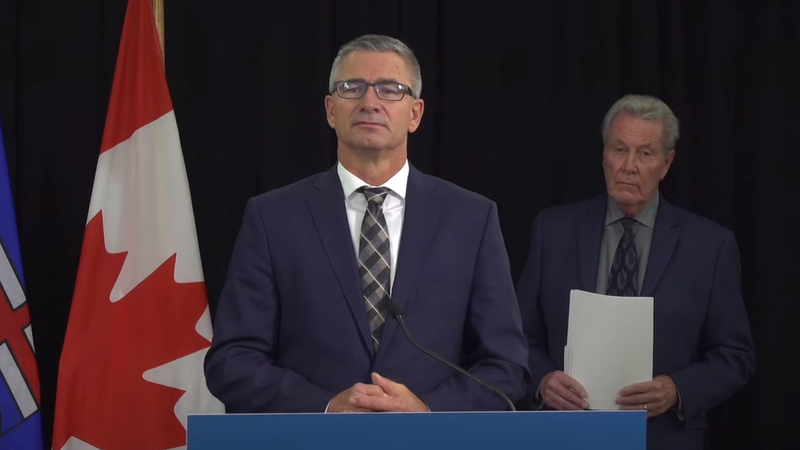
Minister of Finance and GP-Wapiti MLA Travis Toews (Photo: Government of Alberta)
Changes to Alberta's Auto Insurance model

UCP tables changes to auto insurance model, releases full report on overhaul to insurance system

Oct 29, 2020 | 3:26 PM

In a move to reduce red tape, address insurance costs, and increase medical benefits for those involved in collisions, the Alberta Government has tabled Bill 41, the Insurance (Enhancing Driver Affordability and Care) Amendment Act.

Following a notable rise in auto insurance premiums across Alberta, the UCP created the Automobile Insurance Advisory Committee in December, which was tasked with reviewing the current insurance model and to come up with recommendations on ways to improve auto insurance for Albertans.

The Committee has completed the review and submitted a report, which is composed of 89 conclusions as to the reforms necessary, and has 37 recommendations for a redesigned, privately delivered, no-fault accident care and compensation model.

The new model involves three key elements to be effective. Those are early and appropriate medical treatment; replacing the existing torte model with a regulatory model; and increasing enforcement and penalties for traffic infractions and risky driving behaviours.

The proposed redesigned insurance model is expected to reduce the rates for most Albertan’s auto insurance by between 9.4 and 10 per cent, while also stabilizing auto insurance pricing in the long run.

The report also focuses on improving the health outcome of those injured in automobile collisions or incidents. The Committee has come up with a new continuum of care model for all people injured in an accident through proposed changes of the classification of strains, sprains, and whiplash to more neutral verbiage with three types of injuries. Type 1 covers minor injuries, Type 2 covers major injuries, such as those that require treatment at hospital, and Type 3 involves catastrophic injuries.

The report also outlines incentives for both the health care providers and those with Type 1 injuries to engage with health care, which will lead to quicker recoveries

He says since these changes won’t be able to function without effective management of the injured person, they are proposing the creation of an “Injury Navigator,” to assist people going through the system and acting on their behalf.

The report also proposed the creation of a Traffic Injury Regulator, to oversee accident claims administration to help advance claims for health treatment benefits and economic losses. The Regulator will also be comprised of medical experts to determine the recovery of injured individuals, financial and vocational experts to determine income replacement for those injured. The Alberta Insurance Rate Board will also be part of the Regulator.

The Committee maintains that drivers must remain accountable for bad driving and conduct and that their actions should be reflected in increased premiums.

Chris Daniel, Chair of the Automobile Insurance Advisory Committee, says a fundamentally reformed auto insurance system will require a major shift in attitudes and expectations from current practices, participants, and providers. It will also require a transition period for participating service providers to adapt their business practices.

The Alberta Government has made the report available to the public and will be forming another committee tasked with gathering feedback on the proposed changes, though an exact timeline for that work has not been set as of yet.

In the meantime, Minister of Finance and MLA for Grande Prairie–Wapiti Travis Toews says immediate action is being taken to address the affordability of auto insurance through enhanced medical care and benefits, efforts to stabilize insurance rates, and cutting red tape.

“To contain costs, we will expand the definition of ‘minor injury’ under the Minor Injury Regulation,” says Toews. “Sprains, strains, and whiplash not resulting in serious impairment constitute a minor injury under the current definition. We’re broadening that definition to include conditions arising from sprains, strains, and whiplash that do not create serious impairment.”

Toews adds that dentists will be added as certified examiners to provide input on jaw injuries and that they will also be included with occupational therapists and psychologists as adjunct therapists under the Diagnostic and Treatment Protocols Regulation. Up to $1,000 of treatment in any combination of these health professionals will now be covered under the Regulation.

Another change Toews is pushing for is limiting the number of experts involved in automobile injury litigation.

“For injury claims under $100,000, there will be a limit of one expert,” says Toews. “For claims above $100,000, there will be a limit of three experts. Now, a judge or a court can allow for additional experts should it be deemed necessary to properly adjudicate a case.”

The UCP also plans to remove restrictions on usage-based programs and allow for pay-per-kilometre insurance. Toews says where usage-based insurance has been used, incident rates have dropped.

Toews adds that they will also clarify that accident benefits will be adjusted to meet inflation and that they may be used for medically necessary equipment, vehicle modifications, and home modifications.

To reduce red tape, the government is giving the Insurance Rate Board full authority over grid review and revision and adopting a direct compensation model for vehicle repair and replacement.

Toews says the changes tabled in the legislature could lead to Albertans seeing a $120 reduction in rates per year.

“Every Alberta motorist depends on insurance when we’re injured or suffer a loss. The changes proposed today will ensure a more sustainable and affordable automobile insurance system for Albertans in the future.”