STAY CONNECTED: Have the stories that matter most delivered every night to your email inbox. Subscribe to our daily local news wrap.
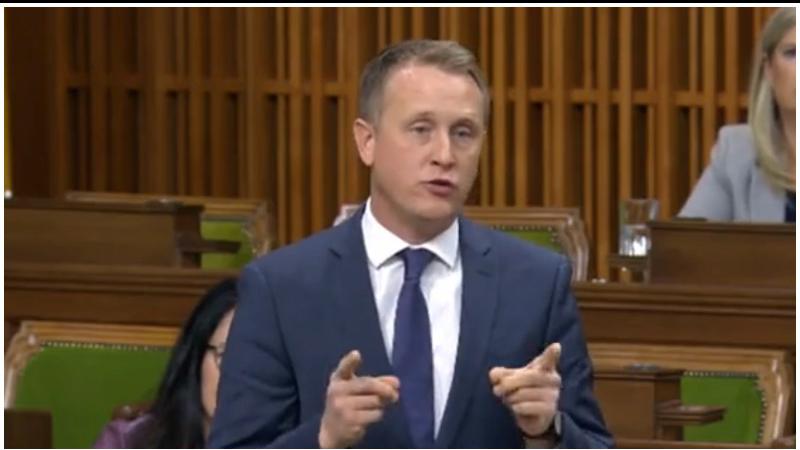
Photo: House of Commons / Government of Canada
Confidence Vote

“Ridiculous” and “undemocratic”: Warkentin displeased with confidence vote over Tory motion

Oct 21, 2020 | 1:40 PM

UPDATE: The Conservative Party’s motion was voted down in the House of Commons Wednesday, avoiding the calling of a federal election. This story has been updated from the original version.

The member of parliament for Grande Prairie-Mackenzie is slamming the notion of the confidence vote held in the House of Commons this afternoon, over his party’s motion to have a committee dedicated to investigating the WE charity scandal, as well as the government’s COVID-19 response.

Conservative Chris Warkentin says the Liberal Party’s decision to hold a non-confidence vote that would have triggered a federal election, exactly one year after the last federal election, over the framework of the committee request is not the way to go.

“This is quite frankly ridiculous and it’s undemocratic,” said Warkentin.

“What we have right now is the Liberal’s threatening an election if the opposition parties continue to call for documents with regards to the Trudeau WE scandal. What we do know is these documents should have been released some months ago.”

Prime Minister Justin Trudeau stated earlier this week that the vote on the Conservative motion was a test of confidence in his minority Liberal government, and as such should lead to a vote amongst the House of Commons on whether the minority Liberals should continue as the governing party.

While he agrees with the Prime Minister’s sentiment, Warkentin says that was not the point.

“Well, we don’t have confidence in their government, but what we do believe is that Canadians should have access to these documents, before they are expected to go out and vote.”

The Conservative’s motion, which did not pass in the House on Wednesday, looked to create an anti-corruption committee that would look into the government’s response to the COVID-19 pandemic, as well as continue the investigation into the WE charity scandal.

While they are were willing to drop “anti-corruption” from the name of their proposed committee, the intent was the same: to create an opposition-run committee to investigate the WE Charity affair and other issues.

The Liberal’s argued the committee should focus on the government’s pandemic response, adding that the committee as presented would bog down the government, when it should be focused on helping Canadians get through the second wave of the pandemic.

“Quite frankly, we don’t care what this committee is called, what the structure of the committee is, we just believe that it needs to be one that will hold this government to account.”

The likelihood of a federal election being called following the vote was slim, as just prior to Wednesday’s sitting in the House of Commons, Warkentin learned of the NDP’s intent to support the Liberals to avoid an election, with leader Jagmeet Singh earlier saying he and his party were not going to be the reason for an election during the COVID-19 pandemic.

Bot the Bloc Quebecois and Conservatives voted in favour of the motion, which therefore led to a vote of non-confidence, while the New Democrats, Liberals, Greens and Independents voted down the motion, therefore voting confidence in the minority Liberals.

“[The NDP] have decided to go along with the Liberals, and I don’t blame them,” said Warkentin.

“They are afraid of an election. They don’t have a whole lot of money. The NDP has been struggling under Jagmeet Singh, and they have continued to not be prepared for an election.”

New Democrats have said they believe the Conservative motion is “over the top,” but they also said the Liberal counter-proposal wasn’t good enough — particularly since it calls for a Liberal chair rather than allowing an opposition member to preside.

“We just hope that we can work with them to bring transparency and accountability in some other way,” said Warkentin. “Because quite frankly, we believe that in a democratic country like Canada, the taxpayer deserves to know what is happening with their money.”