STAY CONNECTED: Have the stories that matter most delivered every night to your email inbox. Subscribe to our daily local news wrap.
Photo: dreamstime.com
Rules around gyms

Province relying on fitness centre owners, clients to define low-intensity activities

Mar 2, 2021 | 5:46 PM

Health Minister Tyler Shandro says what constitutes high and low-intensity physical activity at the gym will be left up to gym owners and clients to decide.

Shandro spoke Tuesday, following Monday’s announcement that under Step 2 of the province’s phased relaunch plan, “low-intensity” indoor physical activities at gyms and fitness centres would be allowed to go ahead in Alberta.

That led to some confusion amongst both owners and clients about what exactly that constitutes.

“Let me be clear: if you operate a gym, you can be open,” announced Shandro Tuesday. “That is perfectly within the rules.”

The health minister says the province has consulted with operators of fitness centres and gyms in Alberta, suggesting they wanted to see a model similar to the one that is used in British Columbia.

Alberta’s western neighbour has been utilizing the model of allowing low-intensity physical activity at gyms and fitness centres while barring those that are considered high-intensity. This has not led to significant increase in spread of the virus that causes COVID-19.

“Low-intensity fitness is stuff that doesn’t make you breathe significantly harder than you usually do,” explained Shandro. “High-intensity fitness is any kind of exercise that does make you breathe a lot harder than usual.”

Chief medical officer of health, Dr. Deena Hinshaw, says she understands the importance of physical activity, both for physical and mental well-being, which is why she says it’s safe to go ahead with lower-intensity activities.

“We know that COVID-19 spreads in droplets, and when we are engaged in high-intensity activities… we know that we produce more droplets.”

Shandro adds it is not about what activity someone is taking part in but rather about the level of intensity for each individual person. This is why he says they are leaving it up to gym and fitness centre operators, and their clients, to use their best judgment.

“We are relying on owners and clients to use judgment. To show good faith,” added Shandro. “We need people to follow the rules.”

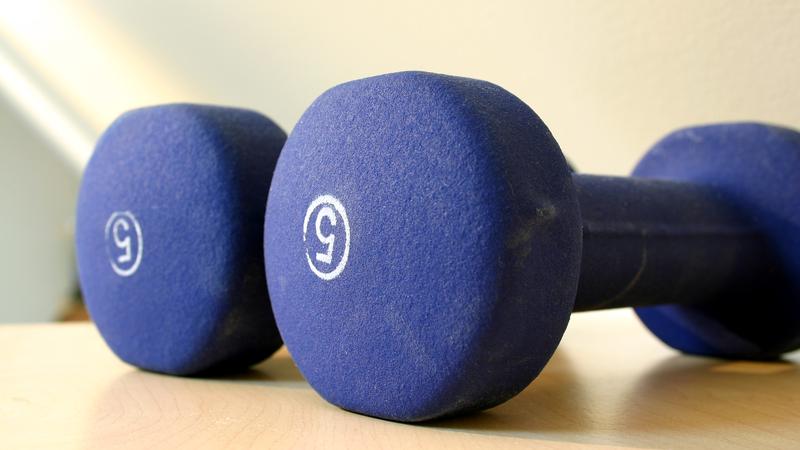
The province’s COVID-19 website lays out examples of what could be classified as low-intensity. These include barre, pilates, stretching, tai-chi, low-intensity yoga, light weightlifting, light treadmill and elliptical use, and indoor rock climbing.

Such activities can go ahead without a trainer but can only be held by appointment only. Clients may not interact with other users in the facility and must maintain a three-metre physical distance.

High-intensity activities are still permitted, but only for one-on-one or one-on-one household training only, with a personal trainer.

Shandro says he will be holding a town hall with gym and fitness centre operators in the near future to answer their questions.