STAY CONNECTED: Have the stories that matter most delivered every night to your email inbox. Subscribe to our daily local news wrap.
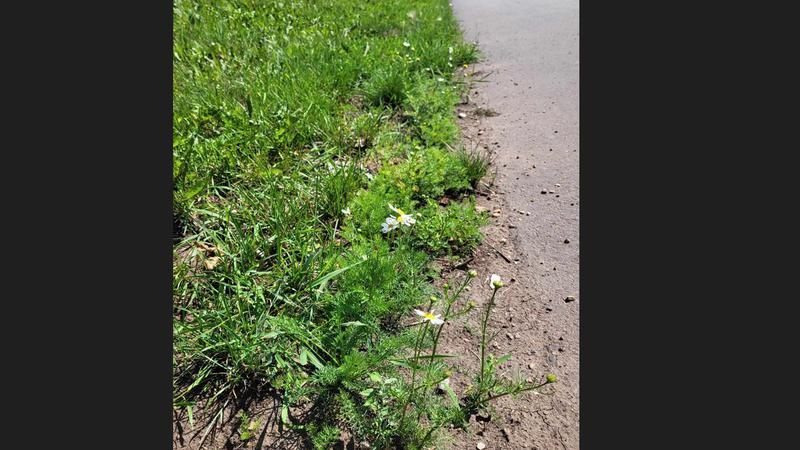
Oxeye daisy growing in an area left to go back to its natural state along Resources Road. Photo credit: Lorraine Cook.
City Hall

South Patterson residents unhappy with city hall naturalization project

Aug 8, 2023 | 6:00 AM

A city hall idea to not cut the grass in three areas in Grande Prairie as part of a pilot project is not sitting well with some residents of South Patterson.

The Boulevard Naturalization Pilot Program includes a spot along the west side of the berm along Resources Road between 68 and 76 Avenues.

This has led to complaints about weeds, including some noxious ones, along with poor aesthetics and safety concerns.

Lorraine Cook lives nearby. She says people are wondering why a residential area was picked for this project.

“It’s a berm and then there’s a road. The irony is is that they continue mowing across our road, which is on the east side. There’s all forest just backing the railway tracks and they’re mowing right up to the forest on that side.”

Cook says weeds are now drifting into people’s yards and people are worried about property values.

She adds people were not informed about this until a decision was made and there was no discussion ahead of time.

Cooks says she has seen noxious weeds like Oxeye Daisy and Canada Thistle growing in the same area.

“And they’re still not mowing. What they’ve done instead is they’ve come out and sprayed with herbicide (on) some of the noxious weeds. There is a whole bunch that they’ve missed.”

“I question and am very confused by, how herbicides are good for naturalization. It seems to be a little bit of a contradiction there,” she says.

The other two areas that are part of this program are along 116 Avenue near the Copperwood area and 84 Avenue near the Canfor sawmill.

Cook says there are a lot of people bothered by this.

“There are quite a few neighbours that are not very happy with what is going on in my area. I’ve talked to quite a few just walking down the street and saying hi and stuff like that. It’s kind of the talk of this area, kind of around the water cooler talk right now.”

Cook says she will go back to the city and has also contacted the province about the noxious weeds in hopes it will work with the city to deal with the problem.

She adds these weeds undo everything naturalization is supposed to do. That includes degrading habitats and soil, raising erosion and tick populations, and increasing the wildfire hazard.

The city issued the following statement in response to our request for an interview:

From Spring 2023 to Fall 2025, the City of Grande Prairie is undertaking a Boulevard Naturalization Pilot Program in three locations. The purpose of the program is to restore select areas to their natural ecosystem, by stopping any mechanical control of vegetation in the designated area. There are many benefits of naturalization such as:

· Bank stabilization

· Reduced erosion by slowing water runoff.

· Filtering stormwater, protecting underground infrastructure and improving its longevity.

· Wildlife habitat support and increase in biodiversity, resulting in healthier lands and increase resilience against insects and disease.

· Increased worker safety by removing heavy equipment from operating on slopes.

· Protection of habitats from infrastructure and equipment damage.

· Lowering greenhouse gas emissions by reducing mowing and fertilization.