STAY CONNECTED: Have the stories that matter most delivered every night to your email inbox. Subscribe to our daily local news wrap.
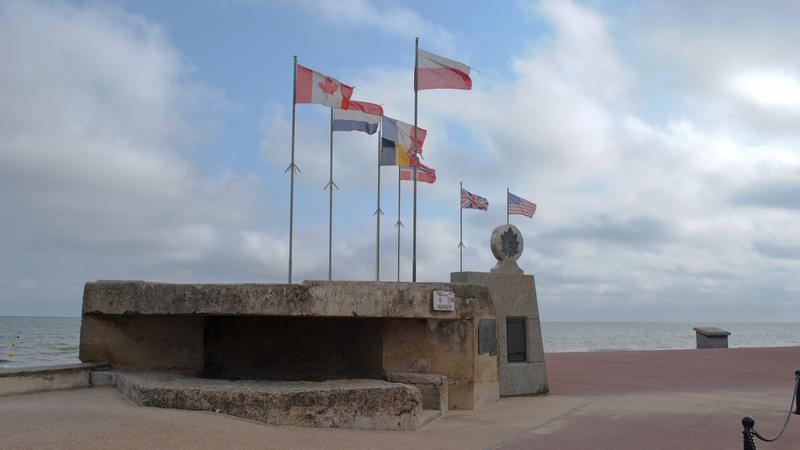
D-Day memorial at Juno Beach, where Canadian forces landed during the invasion of occupied France. Photo 39036180 © Wim Van Der Geest | Dreamstime.com
D-Day Anniversary

D-Day “a necessary but costly step” says Grande Prairie historian on 80th anniversary of the Normandy landings

Jun 6, 2024 | 6:00 AM

People around the world are marking the 80th anniversary of D-Day.

On June 6, 1944, allied forces, 14,000 Canadians among them, stormed the beaches of Normandy in an invasion of Nazi-occupied Europe.

Grande Prairie historian Duff Crerar says the drama around D-Day, and so much being on the line at time, is why this day still resonates with many people.

He calls the landings “a necessary but very costly step.”

“You know, without Britain being there, there was no place to liberate Europe from, but, without the willingness of the English, the Canadians and the Americans to pay the price, to cross the (English) Channel and begin the process of liberating western Europe, it would have meant that the continent would have remained probably under the control of a very vindictive and harsh Soviet Union.”

Crerar says World War II would have continued, “probably for another half a generation” without D-Day.

Crerar adds it was “so dangerous and so daring” as landing on beaches had failed so many times and the channel was impossible to cross.

“The last crossing that had been successful was (in) 1066 (the Norman Conquest of England) so, for the sons of the Normans, who had conquered England, to lead in the return to liberate Normandy from Germany was a huge time span and, statistically, the odds were it wouldn’t work.”

Crerar says as is outlined in the book Stopping the Panzers by Mark Milner, Canadians were given the job of stopping a German counterattack, something that was not noticed much at the time.

“The planners of D-Day knew that should the Germans bring their top-flight armoured divisions into Normandy right away, there would have to be a decisive way to stop them and that would have to be heavy artillery.”

“The Canadians had that. The one skill we did have from World War I that we had mastered again was artillery.”

Crerar adds Canadian guns stopped a German tank attack. He adds if that had failed, D-Day itself could have failed.

“As it was, it took 80 awful days. The fighting in Normandy was so intense and it almost ended the reputation of a number of generals.”

Crerar says Canadians played a “critical role in adding the weight of their guns and the determination to move through and continue to fight even when the Germans were punishing us very severely.”

Veterans have talked about campaigns in other areas, Italy for one, being overshadowed by D-Day.

Crerar adds the fighting in Italy drew German divisions away from the landings, plus provided commanders and others with fighting experience.

“Commanding a division, that’s a lot of men (and) a lot of equipment. Orchestrating that and managing it, even knowing how long it takes for a formation that size to perform any maneuver takes training, but it also takes experience.”

“The lessons learned in Italy in how to manage those large formations were critical when it came to managing the battlefield on D-Day and in Normandy, where we did prove that whatever went wrong, we still had the capacity to manage the battle space.”

Crerar says veterans, historians and civilian groups have made “a determined effort” to make sure this day is not forgotten.

“I think that’s where the capacity of Canadians to remember Normandy in the same way we make a point of remembering the liberation of Holland and we remember even the bad things like Dieppe or the good things like Vimy Ridge, we still have the willingness to recognize freedom had a price and this price was a high one and I think it makes us all wonder if we ever would have to pay that price again.”

Crerar says this does not glorify war but reminds us of the cost of stopping rather than preventing a totalitarian regime from getting started.

“I think we see that in Ukraine right now. So much has been done that the cost of stopping it and preventing it had already exceeded what people expected, but given the lessons of World War II, we shouldn’t be surprised.”

Crerar says history never repeats itself exactly, but “there are echoes and not listening or detecting the echoes can cost us a great deal.”

He adds he has visited the war graves and it taught him how what he calls “the enthusiasm for Canadians” was earned.

“It wasn’t earned by being tourists. It wasn’t earned by investors or industrialists or whatever. It was earned by all these people that came and liberated places that had been under oppression.”

“That’s the contribution we make, and still need to be able to make, for our country to have the profile we want it to have.”