STAY CONNECTED: Have the stories that matter most delivered every night to your email inbox. Subscribe to our daily local news wrap.
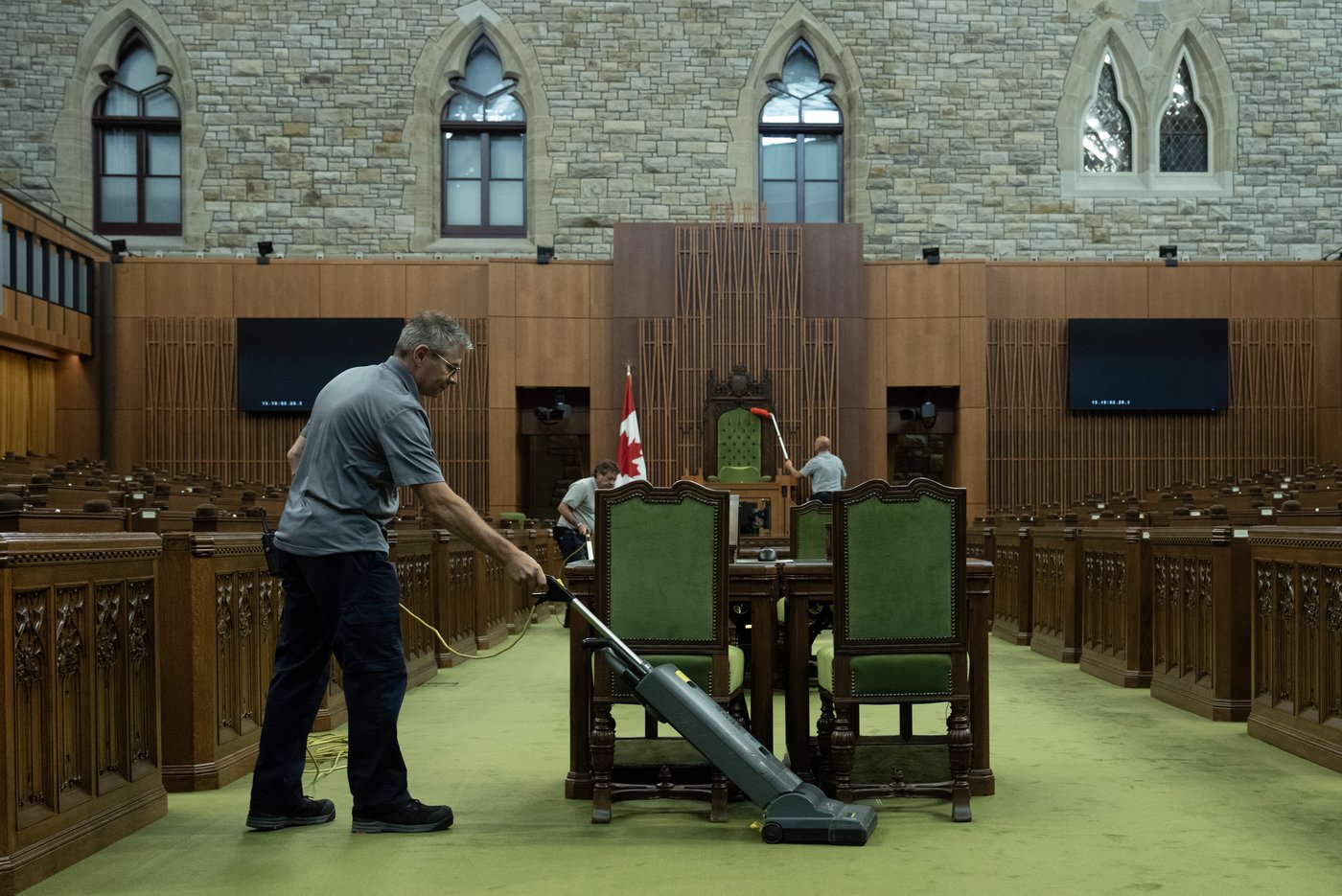
A maintenance worker vacuums the carpet in the House of Commons in Ottawa on Thursday, Sept. 17, 2026. THE CANADIAN PRESS/Adrian Wyld

Bills, byelections and bilats: what you need to know as MPs return to Parliament Hill

Sep 20, 2026 | 4:00 AM

OTTAWA — Members of Parliament are making their way back to Ottawa for the fall sitting of the House of Commons that gets underway on Monday.

It’s set to be a busy season with the release of the federal budget, debate on legislation and looming byelections.

Here are five things to watch for:

The budget

Prime Minister Mark Carney’s government decided last year to buck tradition and move the release of its annual spending plan to the fall, rather than the spring. It also split the document into an operating budget and a capital budget.

Finance Minister François-Philippe Champagne has spent the summer consulting with a wide range of stakeholders about the budget but has not yet set a date to release the next fiscal plan.

The prime minister did offer a hint about what to expect from the coming budget. Carney told investors gathered for last week’s investment summit that his government plans to balance the operating budget next year, 12 months ahead of schedule.

The government projected a deficit of $65.3 billion for the current fiscal year in April’s spring economic update, though many economists expect high global oil prices will boost Ottawa’s bottom line in the fall budget.

Bills

Government House leader Steven MacKinnon said Friday that “very significant economic legislation” will be the centrepiece of the fall sitting.

Carney said Friday the government will introduce legislation, to be called the Building Canada Strong Act, that will help speed up approval of new federal projects.

“One project, one review, one year,” the prime minister told reporters.

There will also be legislation to enact the fuel excise tax extension that Carney announced on Sept. 2. That bill will formalize the decision to extend the tax break on gas and diesel, introduced in response to higher oil prices caused by the ongoing conflict in Iran.

The federal government consulted with employers and unions over the summer about the state of labour relations following contract disputes at railways, ports and airlines in recent years.

Jobs Minister Patty Hajdu would not say Friday whether the Liberals are planning to propose changes to the Labour Code this fall, though MacKinnon hinted “improvements” to the code are on the agenda.

Debate will also continue on some controversial government legislation. Bill C-22, the lawful access bill, is before the Senate. The digital safety bill, which seeks to regulate AI chatbots and restrict social media access for kids under 16, is before the House.

A First Nations water bill was reintroduced in the spring — though critics say it’s a weaker version of a previous bill that recognized First Nations’ right to clean water on their territories.

Tariffs and trade

Trade talks with the U.S. are off — at least for now — but that doesn’t mean the issue is going away. Conservatives have been calling on the government to release the deal that was hammered out with the Americans before the Canadian side walked away from the negotiating table.

Carney has said that Canada’s new alliance (or associate membership) with the European Union will come to Parliament for debate.

Conservatives have called for a Commons debate on the EU deal and are insisting that Canada should not import what they say are bad European policies on things like immigration and taxes.

Byelections

Three new Liberal MPs will take their seats for the first time this fall after winning byelections in late August.

Six more byelections are set to be called in the coming months in Saskatchewan, Ontario and Quebec.

In Yorkton-Melville, voters will replace longtime Conservative MP Cathay Wagantall. Her caucus colleague Larry Brock resigned Friday as the representative for Brantford-Brant South.

Two Liberals also stepped down: Shaun Chen left his seat in Scarborough North and former minister Steven Guilbeault made a high-profile decision to walk away from Carney’s caucus, leaving an opening in Laurier-Sainte-Marie.

Voters in two other Quebec ridings are also set to replace MPs who left federal politics to run provincially.

In Rosemont-La Petite-Patrie, a vote will be held to replace New Democrat Alexandre Boulerice, and Saint-Hyacinthe-Bagot-Acton will choose a new representative after Simon-Pierre Savard-Tremblay left the Bloc Québécois.

Carney has six months after a seat becomes vacant to set a date for a byelection. It’s likely the races in Quebec won’t happen before the provincial election on Oct. 5.

Bilateral meetings with world leaders

Carney, who is fresh off a trip to France to speak to the European Parliament, is also expected to travel to the United Nations General Assembly this week in New York City.

Carney is set to host world leaders who are interested in his pledge to diversify trade beyond the U.S.

Vietnamese President To Lam will make a state visit to Ottawa next week, and Indian media reports that Prime Minister Narendra Modi is expected to visit in December.

The prime minister typically attends a couple of big international summits that are held in November: the Association of Southeast Asian Nations is being hosted by the Philippines this year, and the Asia-Pacific Economic Co-operation forum will be in China.

The summit of La Francophonie is being held in Cambodia, also in November, and the United States is playing host to the Group of 20 nations in December.

This report by The Canadian Press was first published Sept. 20, 2026.

— With files from Dylan Robertson, Craig Lord and Alessia Passafiume

Sarah Ritchie, The Canadian Press