STAY CONNECTED: Have the stories that matter most delivered every night to your email inbox. Subscribe to our daily local news wrap.

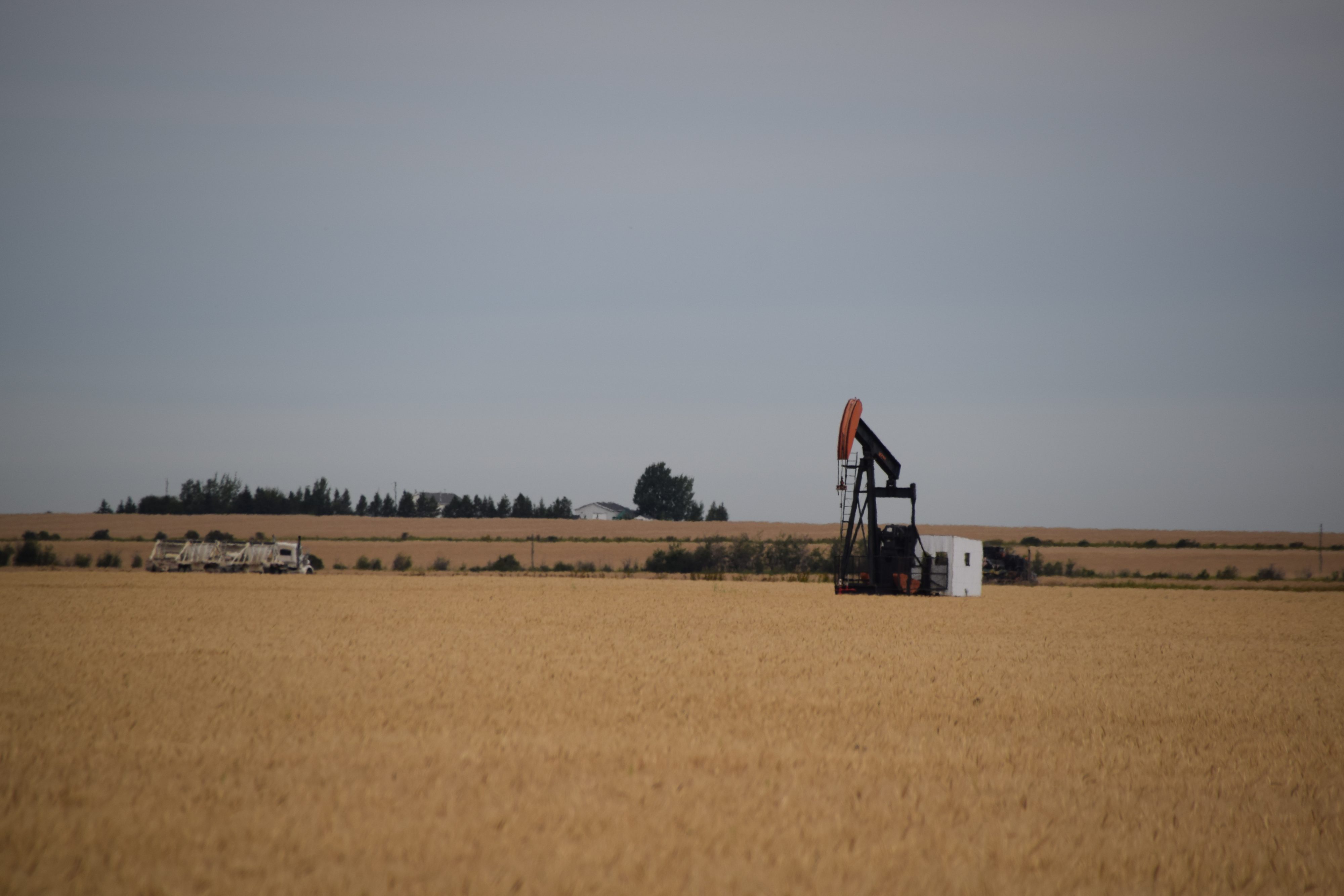
(Image Credit: Erika Rolling)
Crop Report

Peace Region slowly, but steadily advancing harvest progress

Sep 29, 2026 | 12:18 PM

Drier conditions are being welcomed by producers across the province.

According to the latest Alberta Crop Report by ASFC, harvest of major crops in the Peace was 23.4 per cent complete as of September 22.

Harvest progress went up 10 per cent compared to the report period before. The breakdown of the estimated per cent of crop harvested is:

  • Spring Wheat – 31.9
  • Barley – 31.2
  • Oats – 18.4
  • Winter Wheat – 74.7
  • Fall Rye – 73.1
  • Canola – 10
  • Dry Peas – 62.3

The Peace is the furthest behind in harvest completion in the province, well behind the five-and 10-year averages of 65.7 per cent and 43.3 per cent, respectively.

AFSC estimates indicate that 95 per cent of hard red spring wheat and 48 per cent of oats are in the top two grades, while only three per cent of malt barley varieties will grade 1 C.W., and 94 per cent of other varieties will make the top grade.

Canola is grading 92 per cent 1 Can, five per cent as 2 Can. Dry peas are expected to have zero per cent grading 1 Can and 95 per cent 2 Can.

Dryland yield estimations for major crops in the Peace are (bushels/acre):

  • Spring Wheat – 51.6
  • Barley – 64.4
  • Oats – 66.6
  • Canola – 36.7
  • Dry Peas – 42.9

Surface soil moisture ratings remain the best in the Peace, despite dropping one point to 90 per cent good-to-excellent when compared to the report prior. Sub-surface soil moisture was unchanged from the report prior and sits at 96 per cent good-to-excellent.

Pasture growth in the Peace declined five points to 46 per cent good-to-excellent. Pasture conditions are rated as 2 per cent poor, 28 per cent fair, 59 per cent good, and 12 per cent excellent.

Provincially, the first cut of dryland hay is estimated to have yielded 1.9 tons per acre, with 58 per cent of the crop in good-to-excellent quality.

The second dryland hay cut yielded an estimated 1.5 tons per acre with 68 per cent of good-to-excellent quality.

The 10-year average for dryland hay is a first cut of 1.4 tons per acre with 58 per cent good-to-excellent, and a second cut of 1.1 tons per acre and 65 per cent good-to-excellent rating.

AFSC notes that while yields have been higher in all regions than their 10-year historical averages, challenges were noted in some areas with harvesting hay due to high precipitation.