STAY CONNECTED: Have the stories that matter most delivered every night to your email inbox. Subscribe to our daily local news wrap.
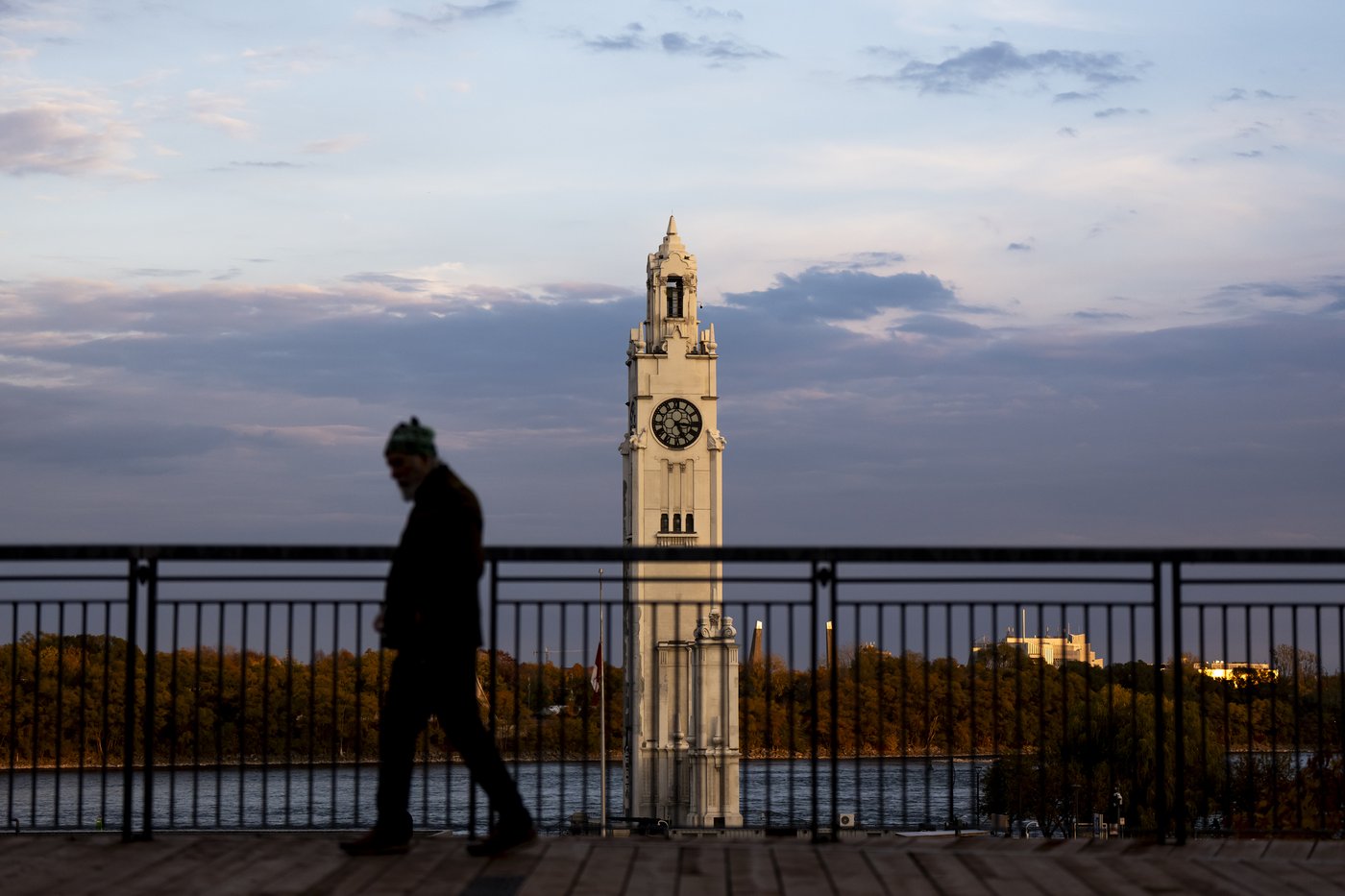
People walk past the Montreal clock tower, in Montreal, on Wednesday, Oct. 28, 2026. THE CANADIAN PRESS/Christopher Katsarov

In the news today: clocks stay put, trade deal nears, Michigan race to watch

Nov 2, 2026 | 3:22 AM

Here is a roundup of stories from The Canadian Press designed to bring you up to speed …

Parents cheer, businesses brace as Western Canada ditches the time change

Canadians woke up on Sunday to a brand new time zone map.

British Columbia, Alberta, Manitoba, northwestern Ontario and the Northwest Territories have opted to stay on daylight time year-round, rather than change the clocks twice a year.

Some parents in Edmonton say not having to adjust their children’s sleep schedules to account for the time change feels refreshing, though tech experts warn the change could disrupt scheduling systems.

Calgary hairstylist Jordan Janovcik says he spent the summer double- and triple-checking with clients to make sure they knew Alberta was not falling back.

Other businesses, like the country’s airlines and cellphone providers, say operations are normal and have been helping customers stay on time.

—

Trump says U.S., Canada have the ‘concept of a very good deal’

U.S. President Donald Trump says Canada and the United States have “the concept of a very good (trade) deal” and that the two countries are “very close” to reaching one.

Trump made the remarks before reporters on Sunday, while Prime Minister Mark Carney said on social media that he’d had a “good conversation” with Trump on the future of trade.

Carney said the conversation builds on previous talks about what a mutually beneficial trade deal looks like.

The conversation comes ahead of Tuesday’s midterm elections in the United States, where the ongoing Canada-U.S. trade dispute has emerged as a key issue.

—

Political betrayal, Canada trade war: Why Michigan is a Senate race to watch

Michiganders are preparing to head to the polls after an unprecedented final weekend ahead of election day in a close U.S. Senate race that could ultimately control power on Capitol Hill.

Michelle Taylor gasped and shook her head as she watched Democratic candidate Abdul El-Sayed’s primary opponent, Haley Stevens, endorse Republican Mike Rogers on Sunday.

It’s unclear how Stevens’ endorsement may impact the outcome of the closely watched contest, whose outcome could ultimately determine whether Democrats can rein in Trump’s unwieldy use of executive power for the remainder of his term.

Polling shows Democrats are favoured to take the House, where a net gain of three seats would give them a majority.

—

Prime Minister Mark Carney calls six federal byelections for December

Voters in six federal ridings in Quebec, Ontario and Saskatchewan will be heading to the polls Dec. 7, after Prime Minister Mark Carney called byelections Sunday.

Byelections will take place in three Quebec ridings previously held by the Liberals, the NDP and the Bloc Québécois.

The remaining byelections are for Ontario ridings Brantford—Brant South and Scarborough North, along with Saskatchewan riding Yorkton—Melville.

Carney’s Liberals currently have a majority government after winning three byelections earlier this year.

—

Commonwealth meeting offers Carney a chance to boost diplomatic ties, experts say

Prime Minister Mark Carney is heading to Antigua and Barbuda today for a meeting of Commonwealth heads of government.

Much of the meeting is expected to focus on trade and investment, but experts say the gathering is also a chance for Carney to boost diplomatic ties with other countries.

The meeting provides an opportunity to get face time with representatives of fifty-six countries across the Caribbean, Europe, Africa, North America and the Indo-Pacific.

Experts say it’s an opening to rebuild ties with Commonwealth countries that Canada used to have much closer relationships with — something that could give Canada an edge at institutions like the United Nations.

—

This report by The Canadian Press was first published Nov. 2, 2026.

The Canadian Press