STAY CONNECTED: Have the stories that matter most delivered every night to your email inbox. Subscribe to our daily local news wrap.
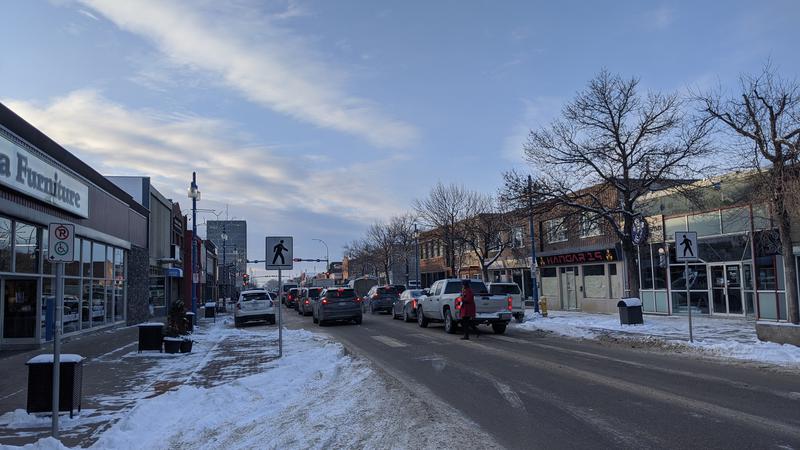
Photo Credit: Shane Clausing
spring forecast

Cool, but seasonal forecast expected for spring in Peace Country

Mar 4, 2021 | 12:11 PM

After escaping the polar vortex in February, the Grande Prairie area is expected to see some cooler, but more seasonal temperatures this spring, according to Environment Canada’s projected spring forecast.

“I think in the next week, we’re looking at temperatures in the Grande Prairie area near the normal or above the normal for the next little bit here,” said Dan Kulak, a meteorologist with Environment Canada. “In the longer range, we’re looking at a spring across the province that will be dry and mild across the south, and maybe cool and seasonal precipitation in the far north.

“Where that leaves Grande Prairie is a little bit of a challenge to talk about right now, but I think it’s probably going to be somewhat similar to a normal spring.”

Kulak tells EverythingGP that we’re likely out of the woods when it comes to having another polar vortex come through. However, he adds the Grande Prairie area could still be dealing with some snow throughout March and heading into April.

“Cold weather does happen in the months of March and April. If we look back at some of the old climate stats, we do notice that March and April do tend to have more snow in Grande Prairie than does February.”

While many residents want to be done with the snow, Kulak says snow is actually a sign of seasonal change.

“The sign of spring is actually snow as weird as that seems, but that’s how the climate works in this part of the world.”

As for recapping the winter season, Kulak says there were some abnormalities we saw this year compared to others, outside of the polar vortex.

“It was generally dry for the winter season across much of the province. Many locations including Grande Prairie was within the 15 driest years that we have on record.”

Kulak says Environment Canada makes its weather predictions based on many different things including ocean patterns, El Nino, La Nina, historical comparisons for how the year might evolve and other mathematical modeling as well.

“In the end, there’s a lot of number crunching that goes into it and we come out with a product that’ll either be near, below, or above normal for temperature perception and at the end of the season, we find out how close we were.”