STAY CONNECTED: Have the stories that matter most delivered every night to your email inbox. Subscribe to our daily local news wrap.

Photo credit: 198234531 © Sergiy Akhundov | Dreamstime.com
Crops

Peace Region farmers asked to take part in cover crops survey

Mar 22, 2021 | 5:30 AM

A Ph.D. student from the University of Manitoba says his survey on cover crops has already drawn a lot of interest from the Peace Region and he is hoping for more.

Callum Morrison says he felt the Peace was an area that needed to be included in the survey.

“Across the Prairies, there are huge differences in climate in terms of both the growing degree days, the amount of time a farmer has to grow a cover crop but also in the moisture, so it is very important to get specific data to specific areas,” said Morrison,

“Obviously, data coming from, say, southern Manitoba or Ontario is not going to be applicable to the Peace.”

Morrison says he wants to hear from both those who do grow cover crops and those who don’t. His work concentrates on Alberta, Saskatchewan, Manitoba and Ontario, but B.C. Peace farmers can take part as well. Survey parameters are based on provincial borders.

Since the survey launched in October, more than 400 Prairie farmers have participated. Opening it to Ontario producers in February has brought in another 650 responses. Morrison says he is just as interested in hearing from those farmers who have not grown cover crops as those who have.

“Because it’s really, really important that we demonstrate the challenges that are limiting cover crops and we can also gauge what opportunities there are for cover cropping in the future,” said Morrison.

“It is important for farmers to tell us what isn’t working.”

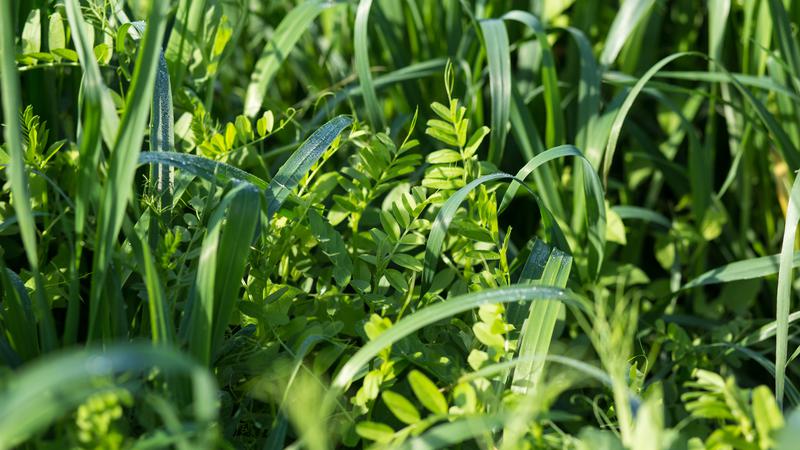
Cover crops are used to cover the soil to prevent erosion and improve soil quality, rather than being grown as cash crops. Morrison says he wants to do this kind of research because he thinks cover crops have what he calls “great potential.”

“To help us improve western Canadian soils and also really try and benefit environmental health but also benefit farmers,” adds Morrison. “Also, the fact there was not the wealth of information that really farmers need to make the best decisions regarding cover crops.”

Morrison says this survey is the first of its kind. It will be up until April 1. A link can be found here.