STAY CONNECTED: Have the stories that matter most delivered every night to your email inbox. Subscribe to our daily local news wrap.

Proposed Ring of Fire mine in northern Ontario clears another regulatory hurdle

Feb 24, 2026 | 11:38 AM

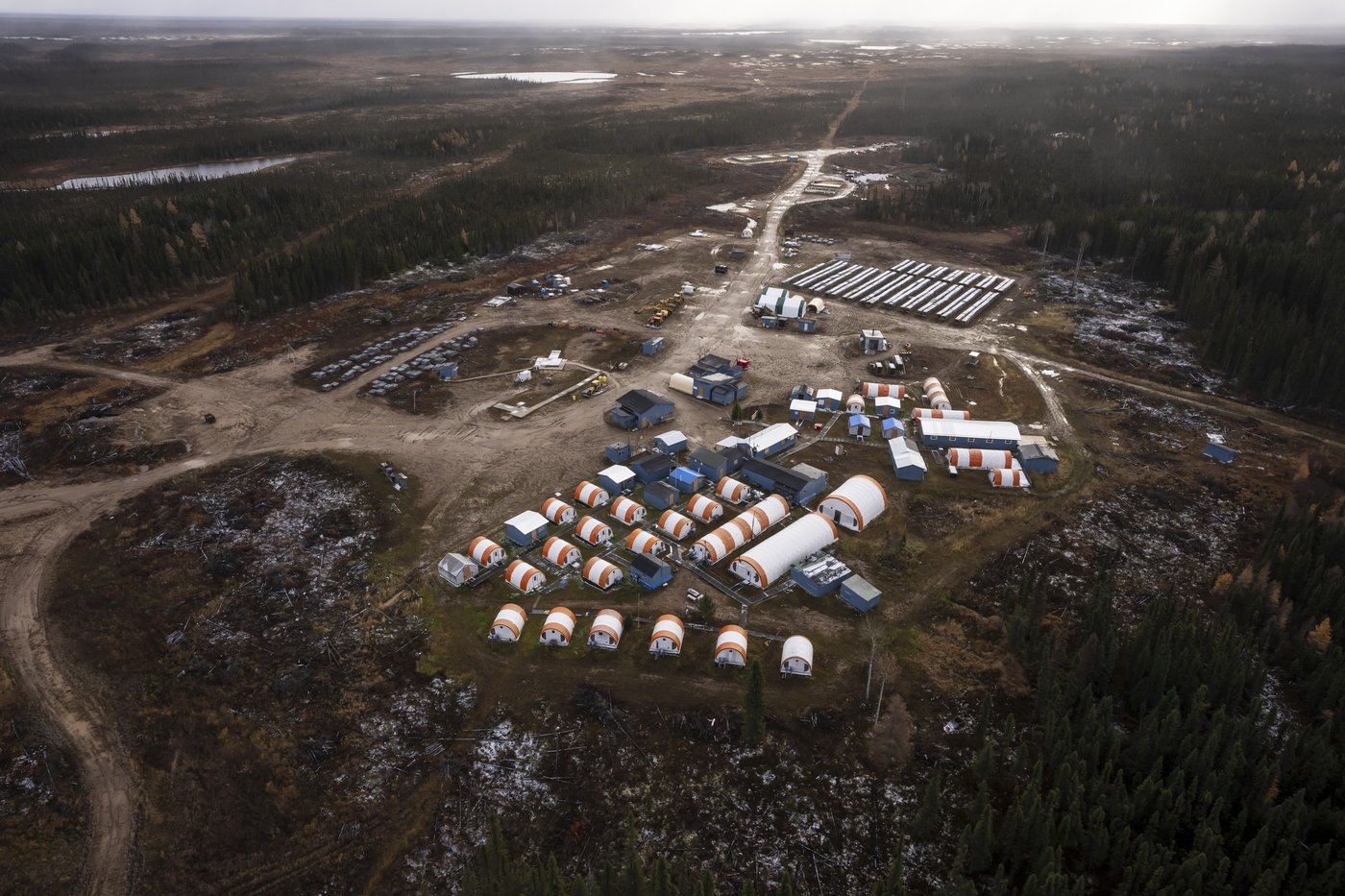
TORONTO — A proposed mine in Ontario’s Ring of Fire region has cleared another regulatory hurdle despite a First Nation’s protest.

The federal government has decided not to designate Wyloo’s Eagle’s Nest project for an impact assessment, which examines the possible environmental, health, social and economic impacts of a project.

There are other means to address concerns about the proposed mining project, including several federal and provincial laws and their corresponding legislative mechanisms, said Terence Hubbard, president of the Impact Assessment Agency of Canada.

Wyloo has been “actively consulting with numerous Indigenous groups, working to address potential impacts of the project,” and is committed to transparency and ongoing dialogue to deal with any concerns, Hubbard said in a statement.

Wyloo’s proposed mine has become a lightning rod and has divided several nearby First Nations on the path forward.

Last fall, Neskantaga First Nation requested the impact assessment of the proposed mine, saying it will have a severe effect on its homelands, especially the Attawapiskat River and its tributaries that it relies on for traditional ways of living.

“We submit that the proposed mine is likely to cause severe adverse effects in areas of federal jurisdiction, particularly on Indigenous peoples including our First Nation, fish and fish habitat, as well as migratory birds,” Neskantaga First Nation Chief Gary Quisess wrote in a letter to the federal government in October.

“Further, cumulative impacts from induced development caused by the approval of Eagle’s Nest, the most advanced mining project in the Ring of Fire, are also likely to be adverse, severe, and irreversible, including on the rights of Indigenous peoples, and Canada’s ability to meet its international climate change mitigation commitments.”

Quisess said Tuesday he was tied up dealing with a death in the community and couldn’t comment on the decision to skip the impact assessment.

He has previously told The Canadian Press his First Nation is not necessarily against development, but they would like to see several issues addressed first before contemplating what they view as life-changing development to the land and waterways.

The First Nation has been under a boil-water advisory for more than 31 years. Like other First Nations in the region, it has a housing crisis that leaves people living in extremely overcrowded homes. Suicides affect northern Ontario First Nations significantly more than the rest of the province. Many people also have to leave their communities to get basic health care.

The Ontario government has signed partnership deals with two other First Nations in an effort to build the mine and roads to the remote part of northern Ontario.

Webequie First Nation and Marten Falls First Nation have both recently submitted provincial environmental assessments on two roads that would connect their homelands to the Ring of Fire and Ontario’s highway system.

Webequie hopes to begin building the road in April while Marten Falls is expected to begin work on its road in August. Both are leading a third environmental assessment of the Northern Link Road that connects their proposed roads, with the assessment expected to be submitted in a year or so.

Both First Nations have said they want to be part of development in order to lift their nations out of poverty. They also want to be connected to the provincial highway system in order to decrease their dependence on an unreliable winter road season.

All three First Nations are extremely remote and can only be accessed by air or by a winter road. All three remain on diesel to power their communities. The fuel is delivered during the winter road seasons, but that season continues to shrink due to climate change.

The Ring of Fire region is some 5,000 square kilometres in size and located more than 500 kilometres north of Thunder Bay. The nearest provincial road is several hundred kilometres south.

It partially sits in the James Bay Lowlands, much of it covered in peatlands. The crescent-shaped region is North America’s largest wetlands.

It is also replete with critical minerals. Australian mining giant Wyloo, which bought the proposed mine in 2022, believes it will become one of the world’s largest nickel mines.

Wyloo and several other mining companies have staked more than 40,000 claims to lands packed with chromite, nickel, copper and other minerals used to make steel, batteries and electronics.

A federal regional assessment of the project also remains in place.

Wyloo CEO Luca Giacovazzi said the latest decision is a “recognition of the way we’ve designed the mine to try and really make sure that we keep our footprint as small as possible.”

“We still have a very rigorous process to go through before we develop the project, which includes a very comprehensive consultation process,” he said.

Giacovazzi said the company’s feasibility study for the project is “pretty much complete now,” with a few “little things to finalize.”

The company plans two deep, connected underground mines, named Eagle’s Nest and Blackbird, to pull ore from. It plans to build a concentrator on site to process nickel and copper.

Wyloo is also planning advanced exploration that involves more drilling in the next six to 12 months, and a “full blown consultation period” after that.

Yet the decision and reasons given by the Impact Assessment Agency of Canada are “concerning,” said provincial New Democrat Sol Mamakwa, who represents the riding of Kiiwetinoong in northern Ontario where the Ring of Fire sits.

“I say that because it overestimates the safeguards in place right now, but also underestimates the level of possible harms to the land and the people and the animals that live in it,” he said.

He pointed to Ontario’s Bill 5, which came into law last year, that allows the province to designate so-called “special economic zones,” areas where it can suspend any and all laws in order to construct large projects, including mines.

“First Nations are not simply regulatory participants in these approval processes,” he said.

“We have to understand rights holders have the constitutional authority to have our systems of governance respected and to assert our rights to self-determination on our homelands, but this is not happening.”

This report by The Canadian Press was first published Feb. 24, 2026.

Liam Casey, The Canadian Press