STAY CONNECTED: Have the stories that matter most delivered every night to your email inbox. Subscribe to our daily local news wrap.
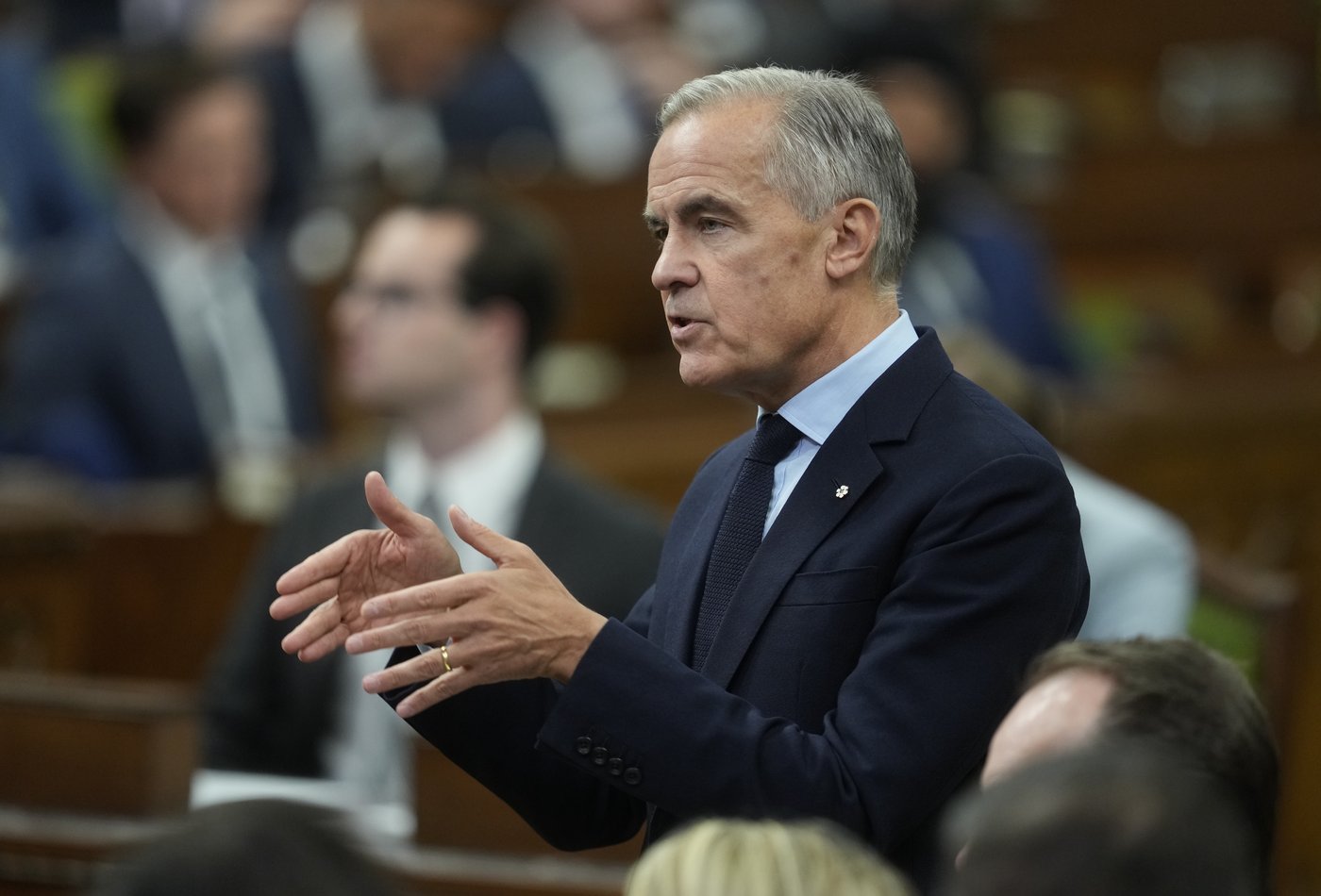
Prime Minister Mark Carney rises during question period on Parliament Hill in Ottawa on Thursday, Sept. 24, 2026. THE CANADIAN PRESS/Adrian Wyld

PM looks at when to boost immigration as government gets system ‘under control’

Sep 29, 2026 | 10:55 AM

OTTAWA — Prime Minister Mark Carney says that with Canada’s immigration system back under control, the question now is when to begin a “controlled increase” of the country’s population.

“Now the question starts to become, when do we resume some controlled increase in the population, which is the nature of Canada?” Carney told the New York Times.

“So that will happen, and we just want to make sure that we’ve got it under control.”

Carney made the remark in a recent interview with the New York Times, just over a month before the government is required by law to release its immigration levels plan for the next three years.

Carney said in July the government had “taken back control” of the immigration system after rapid population growth under the government of Prime Minister Justin Trudeau.

A spokesperson for Immigration Minister Lena Diab’s office said the prime minister cited significant declines in the number of new student and temporary worker arrivals in his interview.

The spokesperson also pointed to an October 2025 TD Bank report that suggested reduced immigration is easing housing market pressure, and to a Statistics Canada report tracking low population growth.

When asked if the government is planning any increase this year, the spokesperson said the 2027-2029 immigration levels plan will “ensure immigration remains at sustainable levels.”

That plan must be published by law by Nov. 1, with a grace period if that date doesn’t fall on a parliamentary sitting day. The deadline falls on a Sunday this year.

Conservative immigration critic Michelle Rempel Garner said now is not the time to plan for more immigration.

“Immigration levels need to go down, not up,” she said on social media.

The government had planned to increase the number of permanent residents being admitted to Canada annually to 500,000. It changed course with the 2024/25 immigration plan and started reducing the intake.

The government also began capping the number of temporary workers and students being admitted to Canada after it said major increases in those populations had contributed to strains on the housing and job markets, health care and other services.

The government has set a goal of reducing the temporary resident population to five per cent of the total population by the end of next year.

The most recent immigration levels plan called for 385,000 permanent resident admissions this year and 370,000 in both 2027 and 2028.

The government did introduce two temporary measures to welcome about 148,000 more permanent residents over the next two years that are not counted in the broader plan.

The C.D. Howe Institute’s immigration targets council recommends the government continue to reduce the number of arrivals over the next three years. The council recommends admitting 380,000 permanent residents next year, 350,000 in 2028 and 340,000 in 2029.

Parisa Mahboubi, the council’s chair, said it would be better for planning if Canada admitted immigrants at a steady rate, linked to a target percentage of population, instead of changing the plan every few years. She said those periodic shifts in immigration policy led to the government admitting “more than what Canada could absorb.”

She said a sign of a balanced immigration system would be the government no longer having to reduce the intake of temporary immigrants.

The council includes several top academics who study immigration policy, a Trudeau-era deputy minister and former Alberta premier Jason Kenney.

Mikal Skuterud, an economics professor at the University of Waterloo and C.D. Howe panel member, said the panel is still recommending historically high immigration rates at around 0.9 per cent of the population.

Carney told the New York Times Canada’s GDP is shrinking due to limited population growth. Statistics Canada estimated 0.5 per cent population growth year-over year as of July 1.

Skuterud cautioned Carney against listening too closely to “the business lobby” and said his government shouldn’t address a “tight labour market” with immigration.

“Businesses have to compete for scarce labour. And how do they compete? Well, they’ve got to offer higher wages to compete, or more attractive jobs more generally,” he said.

“I worry that Mark Carney, because the business lobby is going to pressure him … that the lobbying from them is going to cause him to make the same mistakes the previous governments have done, that he’s going to see immigration as a solution for businesses. And that’s a problem.”

The council also says it “strongly recommends” the government track all permanent resident admissions through a single target number to clearly indicate how many people it plans to admit in a given year.

It also recommends the government treat the five per cent target for the temporary resident population as a ceiling. It says the goal should be to reduce the number of temporary residents to three per cent of the population.

Statistics Canada estimates non-permanent residents accounted for 6.7 per cent of the population as of July 1.

Skuterud said this suggests the government is going to have a hard time meeting its goal of shrinking that population to five per cent of the total population by the end of next year.

Mahboubi said it’s hard to accurately estimate the non-permanent resident population because of limited exit tracking and the fact that some people overstay their visas or become permanent residents.

This report by The Canadian Press was first published Sept. 29, 2026.

David Baxter, The Canadian Press