STAY CONNECTED: Have the stories that matter most delivered every night to your email inbox. Subscribe to our daily local news wrap.
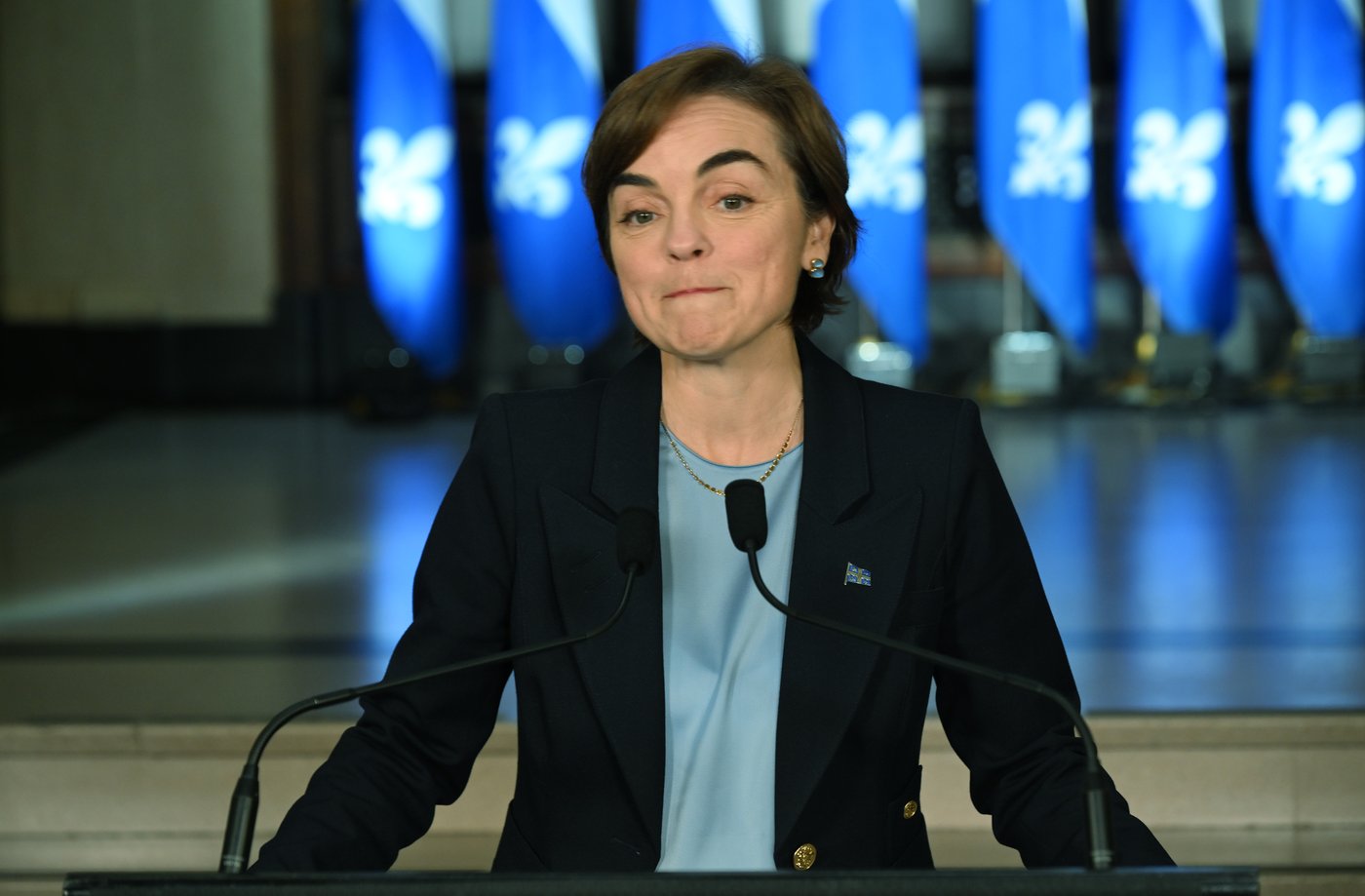
Coalition Avenir Québec Leader Christine Frechette pauses as she speaks at a post election news conference at the premier’s office in Quebec City Tuesday, Oct. 6, 2026. THE CANADIAN PRESS/Jacques Boissinot

Outgoing Quebec Premier Christine Fréchette pushed off ‘glass cliff’ in election

Oct 9, 2026 | 2:00 AM

MONTREAL — When former Ontario premier Kathleen Wynne watched the results of Quebec’s election come in, she says she couldn’t help but draw parallels between herself and Christine Fréchette.

The outgoing Quebec premier stepped down as leader of the Coalition Avenir Québec after her party failed to win any seats in Monday’s election.

The CAQ, founded in 2011, was in power for eight years in Quebec and held 79 seats in the provincial legislature before Fréchette triggered the election campaign in August. But the Parti Québécois capitalized on voters’ desire for change, winning enough seats in the election to form a minority government.

In a fractured political landscape, no party won more than 28 per cent of the overall vote. The CAQ received 13 per cent of all votes, down from the 40 per cent it received in 2022.

Fréchette had taken over as head of the party in April, replacing its founder, former premier François Legault, who resigned after tanking in the polls.

Wynne says she was also thrust in a position of leadership when the risk was high. Women in Canadian politics often face a “glass cliff” where they are given power with a high likelihood of failure, she adds.

“I wasn’t surprised,” said Wynne in a phone interview after the Quebec election. “There’s a definite pattern if we look at the situations that women have stepped into as leaders of parties both provincially and federally.”

Wynne succeeded Dalton McGuinty as Ontario premier in 2013, at a time when the provincial Liberals were unpopular due to a slew of scandals. She led the party to a majority victory in 2014 but lost the following election in 2018 to Doug Ford’s Progressive Conservatives.

Wynne had twice as much time as Fréchette to distance herself from her predecessor, which she believes made all the difference. Wynne was premier for a year and her government passed a provincial budget before going into the general election that she won.

She also draws comparisons between Fréchette and Kim Campbell, the only woman to serve as prime minister of Canada.

Campbell won the 1993 Progressive Conservative leadership race following Brian Mulroney’s retirement. She was in office for 132 days before the party lost to Jean Chrétien’s Liberals in what is considered the worst defeat for a federal governing party.

Much like Fréchette, Campbell inherited a deeply unpopular party with only a few months to rebrand. Mulroney and Legault both had strong political presence, and their successors struggled to make the parties their own.

Fréchette was first elected under the CAQ’s banner in 2022. She served as immigration minister before taking over the energy and economy portfolio.

Wynne, also served as a minister under McGuinty, making it more difficult to distance herself from the track record of her predecessor.

“We both were part of a government that enacted those policies. So, there’s only so much you can do to disavow things that you’ve sat at the cabinet table to support,” she said.

But Université Laval political professor Thierry Giasson says gender is only one factor in the CAQ’s defeat.

While Fréchette seemed to gain some momentum in the first half of the 40-day electoral campaign, due in part to the trade war with the United States, she quickly lost steam and struggled to make her mark in debates.

About a week before election day, she stumbled on the campaign trail by requesting an urgent meeting with Prime Minister Mark Carney to discuss allegations of American interference in the election before she walked back her comments a few hours later. After she acknowledged there was no evidence of foreign interference, the CAQ sunk in the polls and faced a crushing defeat.

In her resignation speech on Tuesday, Fréchette denounced the lack of political opportunity for women and said she hopes her time as premier will open more doors for them. She was Quebec’s second female premier after Pauline Marois’ minority Parti Québécois government dissolved in 2014.

Despite her years of experience and having handled key portfolios in government such as finance, health and education, Marois held her minority government for less than two years. Fréchette held the role of premier for six months.

“Quebec was led by women for a total of 25 months in 159 years,” Fréchette said. “It’s too little.”

Political scientists have studied what University of Calgary professor Melanee Thomas calls the gendered structure of opportunity. She questioned whether men who would have otherwise vied for the CAQ leadership chose not to because of the party’s difficult position.

“Women come forward in that context because they’re like, ‘it’s my chance … if I don’t go now, will I be competitive when things are good?” she said.

Dominique Anglade may also come to mind, having taken over the Quebec Liberal party after the CAQ won its first majority government. She resigned after the following general election when her party lost 10 seats.

An expert in political marketing, Giasson says that while women face additional barriers in politics due to sexism, Fréchette was aware of the “colossal” task ahead when vying for the role of premier.

But he warns against putting all the blame on Fréchette. He believes that her opponent in the leadership race, Bernard Drainville, would have also come out of the general election empty-handed due to the sinking popularity of the Coalition Avenir Québec after its two consecutive mandates.

While Fréchette had hoped to have a “Mark Carney moment,” Giasson said she ended up paying the price for the political baggage left by her predecessor.

“In the end, she had a ‘Kim Campbell moment,’ which must be heartbreaking,” he said. “It’s incredible, 33 years later in another context … to try to reframe things and fail to do so because the (party) legacy is just too overwhelming.”

This report by The Canadian Press was first published Oct. 9, 2026.

Erika Morris, The Canadian Press