STAY CONNECTED: Have the stories that matter most delivered every night to your email inbox. Subscribe to our daily local news wrap.
Photo: dreamstime.com / Erik Zunec
Avalanche Warning

Backcountry caution urged as avalanche warning is issued throughout the Rockies

Mar 6, 2021 | 7:00 AM

With the weather warming up, coupled with a complex snow pack, the conditions are prime for avalanches to occur in the Rocky Mountains.

The avalanche warning, which was first issued on Wednesday, encompasses a significant portion of the mountain range that stretches from the North Rockies all the way down to the US border.

Karl Klassen, a Warning Service Manager for Avalanche Canada, says the warm weather will play a big role in avalanche risks in the more southern parts of Alberta. Klassen says for the regions closer to Grande Prairie, including the North Rockies, the snow pack is made up of deeply buried layers that also creates a big risk.

“The first one that we’re worried about is the January 24 layer that was formed during kind of a clear spell in mid- to late-January. It was not a particularly cold snap, but it was definitely clear. There was a crust that formed, there’s some loose, sugary, unconsolidated snow involved with that crust,” says Klassen.

“That got buried in late January, and then there’s two other layers, depending a little bit on where you are, from early to mid February that don’t have a crust, that was during the cold snap so there was no crust involved, but also kind of weak sugary grains of snow that aren’t bonding very well to the layers above and below them.”

He says these layers are called ‘persistent weak layers’ as they have been there for over a month, but that snow pack has now been reactivated with new snow that fell in the last week and the warming weather, which creates a high avalanche risk.

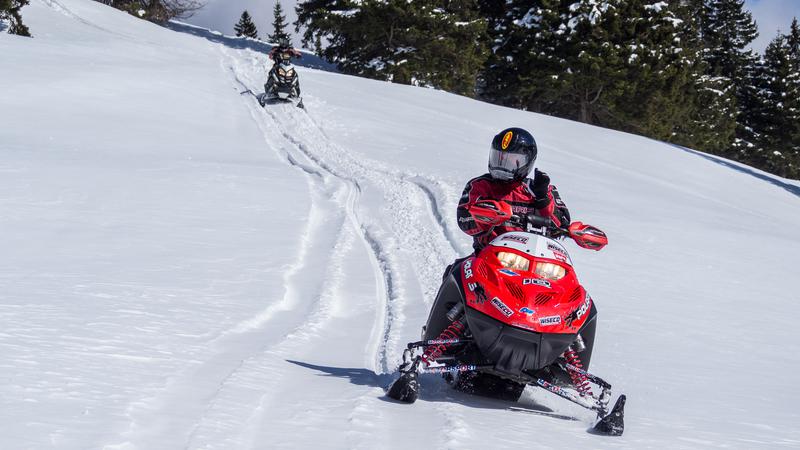
Klassen adds that along with the risk of natural avalanches, there are high risks of human caused avalanches in the back country by snowmobilers, ski tours and others.

Klassen says that risk becomes even more prominent when the weather starts to turn and more people want to go out and enjoy the outdoors. He calls this the ‘blue sky effect,’ but warns that this is when people tend to not recognize avalanche hazards.

“When it’s a sunny, warm, blue sky day, people just want to go have fun and they don’t want to think about avalanche hazard, but it’s exactly right then in this case when we are going to see a spike in the potential hazard from avalanches because of the clear skies allowing the sun to warm slopes and the warming temperatures from the incoming weather system.”

He says people should not go out without the proper equipment and training, or at the very least, someone with training and equipment to plan the trip based off information on conditions and weather, and avoids hazardous areas.

The bare minimum of equipment needed for being in the back country, he adds, includes a transceiver, a probe and a shovel, but Klassen says training and practice is essential to make sure those tools are used effectively.

For more extensive trips, like snowmobiling trips, people should be prepared to build a shelter and a fire, carry a first aid kit, and a satellite phone to call for help in the event of an avalanche or other emergency.

Klassen says those who do go out should try to stay on low angle slopes or in valleys, avoid avalanche terrain, and stay away from big steep slopes, especially as the sun warms up the snow.

“When we have a warning like this out, that means there’s something pretty unusual or extraordinary happening and it really takes even more training or more experience to handle those kind of conditions.”

Training opportunities can be found under the Learn tab on Avalanche Canada’s website.