STAY CONNECTED: Have the stories that matter most delivered every night to your email inbox. Subscribe to our daily local news wrap.
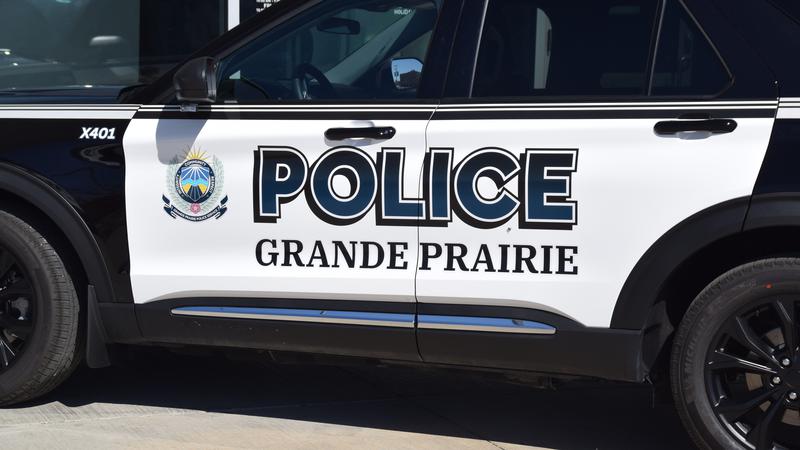
Photo Courtesy EGP Staff
Grande Prairie Police Service

GPPS under fire from National Police Federation

May 29, 2025 | 1:38 PM

After the recent $7 million provincial funding announcement for the Grande Prairie Police Service took place on Wednesday, May 27, GPPS is making headlines once again.

The National Police Federation President and CEO, Brian Sauve, shared a statement earlier today (Thursday, May 29), regarding “Albertans footing the bill for a politically driven agenda.”

“The Province’s announcement of an additional $7 million in provincial taxpayer funding to support the creation of a local police service in Grande Prairie brings the total provincial contributions to nearly $17 million. This almost fully covers the City’s estimated $19 million transition costs. These funds come not from the City’s budget, but from the pockets of Alberta taxpayers.
This decision underscores the provincial government’s ongoing and politically driven push to dismantle RCMP policing in Alberta at any cost, despite earlier failed attempts to convince the public. When that failed, they turned to incentivizing individual municipalities to make the switch, using provincial money to do it.
This preferential and political approach is in sharp contrast to how the Province has treated hundreds of other communities under the Police Funding Model. In 2020, the Province started requiring rural municipalities and small towns to pay more of their frontline policing costs, now up to 30%, and slated to rise to 39% in 2025. That increase has been temporarily paused for one year while the Province renegotiates the funding model, but these communities still face rising costs with no guarantees of improved policing, no local input, and no clear accounting for where their dollars go.
Many community leaders have rightly asked where this money is being spent, as little to no reinvestment has occurred in their communities. Instead, Police Funding Model-collected funds appear to be diverted into provincial political pet projects: feasibility studies, municipal transitions, and the expansion of the Alberta Sheriffs. All this at a time when the Province of Alberta is already facing a multi-billion-dollar deficit. With the emergence of another new policing initiative with no consultation — the Independent Alberta Police Service — Albertans are left asking: “Is Police Funding Model money also being used to fund this?”
There has been no transparency, no consultation, and no evidence that these decisions are in the best interest of public safety or fiscal responsibility. Instead of dividing and duplicating police services, the Government of Alberta should be focused on investing equitably in proven frontline capacity, including in the Alberta RCMP which continues to serve all Albertans with professionalism, dedication, and deep community roots.
Albertans deserve a policing system based on evidence, fairness, and accountability, not backroom deals and political motives.”

Brian Sauve, National Police Federation President and CEO

A municipal police force was approved by City Council in the early morning hours of March 7, 2023.

Throughout the day Council heard from numerous delegations offering their opinions, facts, and lived experiences.

Community consultation was also done, as Council held multiple open houses, an online survey, and read 3,474 letters.

A vote was even held to table the matter until a later date during their March 7, 2023, meeting; however, Council ultimately forced it through for a number of key reasons:

  • Provincial funding may or may not be there if they waited longer,
  • A lack of figures and prices provided against the cost of the Municipal Police Force,
  • Retention when it comes to officers, as Grande Prairie officer turnover is around two to five years.

Since then, a total of $17 million has been supplied by the province, Police Chief Dwayne Lakusta was appointed, the first batch of recruits have graduated, community partnerships have been made, equipment has been acquired, and officers are now active in the community.